
Key Takeaways
- As of May 2026, the maximum aggregate inverter capacity for residential and small business systems in Australia is 30 kVA.
Note: “Aggregate” means the total combined capacity of all inverters in your system. For example, if you have a 10 kW solar inverter and a 10 kW battery inverter, your aggregate capacity is 20 kVA, leaving you with 10 kVA of capacity available under the 2026 limit. - Growatt inverters are widely regarded as a budget-friendly, high-efficiency option with strong model variety and smart monitoring.
- Popular Growatt inverter models include 3 kVA, 5 kW, 6 kW, 10 kW, and 12 kW, covering residential to commercial use.
- Growatt hybrid inverters combine solar and battery storage in one unit, offering flexibility and future expansion.
- Reliability and performance are generally strong, but installer quality, firmware, and local support play a major role in long-term experience.
Introduction
Choosing the right inverter is essential to getting the most from your solar panels. The inverter is the unit that converts DC electricity generated by solar into AC electricity usable by your home, business, and the grid. It also manages monitoring, safety, export limits, and overall system performance.
This Growatt inverter guide is written for Australian users—particularly those in Perth—who want a clear, practical overview of Growatt inverter models, installation rules, monitoring, and real-world reliability. Growatt has become a major player in renewable energy by offering efficient, flexible, and cost-effective inverter and battery solutions for both residential and commercial systems.
What Is a Growatt Inverter?
A Growatt inverter converts DC electricity from solar panels into AC electricity while keeping the system safely connected to the grid or load. Modern Growatt models include built-in Wi-Fi, smart monitoring, export control settings, and safety protections required under Australian standards.
Growatt is a worldwide recognised manufacturer in the distributed energy sector, best known for solar inverters and increasingly for integrated solar + storage systems.
Australian Capacity Rules (2026 Update)
As of May 2026, Australian regulations cap the maximum aggregate inverter capacity at 30 kVA for residential and small business installations. This means:
- Multiple inverters can be installed in parallel, but the combined capacity must not exceed 30 kVA
- Export limits must be configured correctly in firmware
- Compliance with AS/NZS 4777.2:2020 is mandatory, including in Perth
This makes correct system design and commissioning essential.
Growatt Inverter Models Explained

Growatt 3 kVA Inverter
- Ideal for small home installations
- Suits low daily energy requirements
- Compact, easy to install, and cost-effective
Growatt 5 kW Inverter
- One of the most common residential options
- Compact, efficient, and suitable for standard homes
- Good balance of performance and price
Growatt 6 kW Inverter
- Known for high efficiency and easy installation
- Often paired with 6.6 kW solar systems
- Popular choice for Perth households
Growatt 10 kW Inverter
- Suitable for large houses or small business installations
- Handles higher loads and more panels
- Can be used in parallel configurations
Growatt 12 kW Inverter
- Designed for heavy usage and business applications
- Higher capacity and strong thermal design
- Suitable for commercial solar systems
Growatt Hybrid Inverters & Battery Capability
Growatt hybrid inverters have built-in solar and battery storage capability, allowing:
- Battery backup during grid outages
- Flexible expansion as energy needs grow
- Better self-consumption and load management
Growatt emphasises an integrated, reasonable, and flexible “solar + storage” solution, making it attractive for users planning future battery upgrades.
Key Features & Advanced Technology
Key Features
- High efficiency power conversion
- Built-in Wi-Fi and app-based monitoring
- IP65 / IP66 dust and water resistance
Advanced Features
- Export limit control for grid compliance
- Parallel operation support
- Remote firmware updates via monitoring platform
These features help maximise solar investment while keeping systems compliant and easy to manage.
Monitoring, Apps & Connectivity
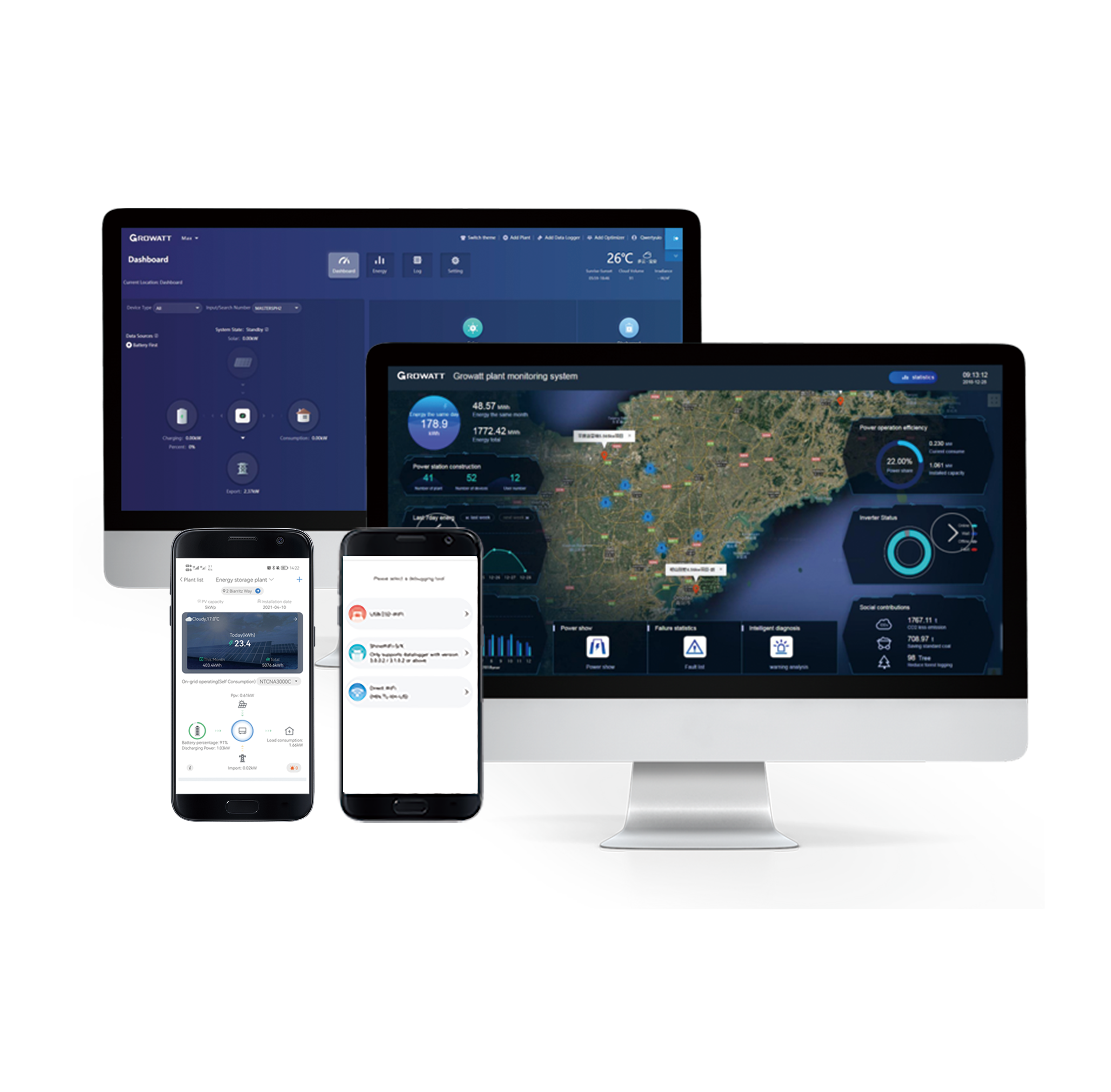
The ShinePhone app allows users to:
- Monitor daily yield and lifetime production
- Track real-time system performance
- Access fault codes and alerts
Note: An Eastron Meter is required specifically for export limiting and self-consumption monitoring. Without the Eastron Meter, the ShinePhone app will only show the solar energy production, not the actual energy usage of the house. Installing the meter ensures accurate monitoring of both solar generation and household consumption.
The app is available on iOS and Android, with most inverters featuring built-in Wi-Fi for easy connection.
User feedback suggests monitoring is functional but can feel inconsistent depending on firmware and model—keeping software updated is important.
Installation, Wiring & Commissioning (Perth-Specific)
Growatt inverters must be installed by a certified solar electrician.
Important requirements:
- Compliance with AS/NZS 4777.2:2020
- Correct export limit settings in firmware
- Use of an Eastron Meter for accurate grid measurements and self-consumption monitoring
- RS485-to-USB converter for advanced monitoring/configuration
Activation Step
- Turn on the AC breaker
- Then turn on the DC switch
Proper commissioning ensures safety, reliability, and grid approval.
Performance, Heat & Environmental Design
Growatt inverters are designed to operate between -25 °C and +60 °C and are rated IP65 or IP66, making them suitable for Perth’s climate.
- Power output may derate above 45 °C to protect internal components
- Installation is recommended in shaded areas (garage or carport)
- Built to handle high light levels and heat
Reliability, Warranty & Real-World Feedback
Growatt inverters are generally seen as:
- High efficiency
- Cost-effective
- A solid value player in the solar market
Warranty:
- Commonly 5–10 years, extendable up to 20 years
Balanced view:
- Reliability is often praised, but depends heavily on installer quality
- User experiences vary by model and firmware version
- Local support has improved, but feedback on long-term service is mixed
- If premium warranty responsiveness is critical, Fronius or Sungrow are often considered safer—but at a higher price
Maintenance & Troubleshooting
Regular maintenance includes:
- Visual inspection of wiring for corrosion or damage
- Cleaning vents to ensure proper ventilation
- Monitoring performance trends
Troubleshooting tips:
- Red LED = check error code
- Verify power connections
- Inspect PV panels for faults
- For persistent issues, contact a certified solar electrician
Firmware updates can often be done remotely through the monitoring platform.
How to Choose the Right Growatt Inverter
When deciding to choose Growatt, consider:
- Energy requirements and load profile
- Residential or commercial use
- Single phase vs three-phase supply
- Battery backup now or later
- Local installer experience and support
Conclusion
Growatt inverters offer a strong combination of high efficiency, advanced features, flexibility, and competitive prices. With models ranging from 3 kVA to 12 kW—and hybrid options for battery storage—Growatt suits a wide range of residential and business solar systems.
While Growatt is clearly positioned as a budget-friendly option, long-term performance and reliability depend on correct installation, firmware management, and local service quality. For many Australian users, especially in Perth, Growatt represents a practical and cost-effective way to maximise solar power and meet growing energy needs within current grid limits.